Sustainability & ESG track · Regenerative systems

Regenerative Agriculture Internship in Bali.

Work with farms and food systems on soil health, crop systems, composting, and regenerative production practices. You take on a defined piece of live work with a named supervisor, building practical experience you can explain well after the semester ends.

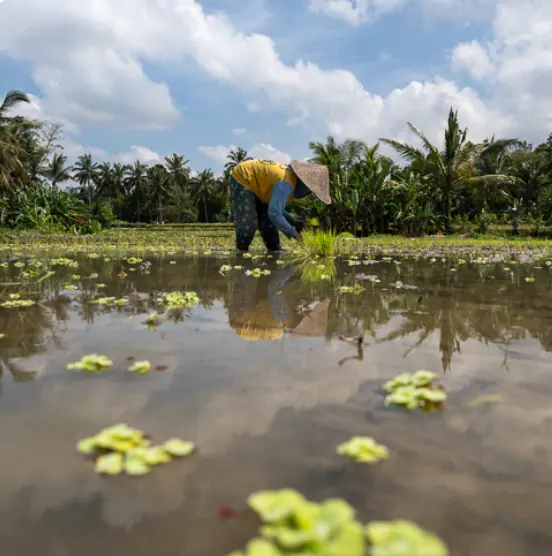
Farmer working in a Bali rice paddy
How the work flows

What you'll actually work on.

The exact project depends on your host. You will work through a defined part of the process, building evidence and outputs the team can use.

Skills you'll build.

Soil health Crop systems Farm practices

Start with the question

Support soil-health and farm-system observations. Your supervisor gives context and feedback, so you understand not only what you are doing but why it matters.

Do the practical work

Research regenerative crop and compost practices. Your supervisor gives context and feedback, so you understand not only what you are doing but why it matters.

Turn it into action

Turn field learning into useful farm insight. Your supervisor gives context and feedback, so you understand not only what you are doing but why it matters.

Honest scope

Where an intern fits on the team.

Yours to own

A scoped contribution

A defined piece of a live project: research, fieldwork, analysis, reporting, or coordination. It is reviewed by a supervisor and designed to contribute to the wider work.

Not on you (yet)

The whole programme

Final decisions, budgets, legal accountability, or running a conservation or impact programme alone. You learn how these work without being expected to carry them.

A project you might ship

An example of the work.

A farm or food-system team is working to improve soil health and reduce inputs over time. You support a defined observation or research task, help document practices and outcomes, and contribute practical insight for the next growing cycle.

It is the kind of work you can talk through in an interview because you understand the question, the evidence, and what the team did next.

Is this you?

Who this role fits.

A relevant degree and curiosity about practical impact work matter more than having done this exact job before.

  • You're studying agriculture, environmental science, food systems, biology, geography, or a related degree.
  • You are comfortable working carefully with information, evidence, and feedback.
  • You want a live project for your CV, not just a passed module.
  • You are ready to learn inside an international, impact-led team.
On Instagram

Life in the Bali cohort.

Coworking, weekends, orientation, and the students you'll be there with — straight from @islandinternships.

Apply now — free, 10 minutesFollow @islandinternships
What you leave with

What you take away.

For your CV

Evidence of practical impact work

A scoped deliverable and a clear story about the project, your contribution, and what it informed.

Experience

How sustainability becomes action

See how environmental and social goals shape decisions, operations, reporting, and partnerships in a live organisation.

Direction

A clearer next career step

Learn whether conservation, ESG, research, clean energy, or regenerative systems is the direction you want to pursue.

Keep exploring

Related Sustainability & ESG roles.

You apply to the track, not a single job ad — we match you to the role that fits.

FAQ

Regenerative Agriculture Intern internship questions.

What does a regenerative agriculture intern do?

You support farms and food-system organisations working on soil health, crop systems, composting, and regenerative production. Placements combine practical observation, research, and reporting around live operations.

Is this internship credit-eligible?

Yes. We provide the internship agreement, named supervisor, learning objectives, mid-term evaluation, and final evaluation report universities commonly require.

How long is the placement and what does it cost?

Placements run 3 to 6 months, with a 10-week minimum. Program fees are €449 for Essentials or €649 for Full Support; monthly Bali living costs are typically €440–€630.

The same semester in the Netherlands costs €990–1,450/month.
Bali costs €440–630/month.

You only pay once matched and confirmed. The application is free and takes 10 minutes.

Apply free — takes 10 minutesSee the full Sustainability & ESG track