The week before you fly is usually the most anxious. You're not nervous about Bali itself — you've looked at enough photos for that. You're nervous about the gap between landing and feeling settled. That gap is real, but it's also very manageable. Here's the playbook.
Before you land
A few things should already be in place before you board your flight. These aren't last-minute tasks — they're things to confirm in the final week before departure.
Housing confirmed. Your accommodation should be arranged and confirmed before you travel. If you're on the Full Support package, this is handled. If you organised it independently, have your address written down and accessible offline — not just in your email inbox.
WhatsApp group access. Island Internship runs an intern community WhatsApp group. You should be in it before you land. If you're not, message us — it's one of the first things you'll use when you arrive.
Airport pickup (Full Support). If you're on the Full Support package, your pickup is arranged. The contact name and number is in your pre-departure pack. Screenshot it. Your phone may not have signal immediately after landing.
SIM card plan. You can buy a local SIM card at the airport (Telkomsel and XL both have desks in arrivals) or at any convenience store in Bali. Don't pay for international roaming — a local SIM costs €10–15 and gives you data immediately.
Cash in IDR. Bali is largely cash-based outside tourist restaurants and larger shops. You can withdraw IDR from ATMs at the airport, but rates and fees vary. Many students find a moneychanger in-destination gives a better rate. Either way, arrive with some cash or have a plan to get it in the first hour.
Arriving at Ngurah Rai Airport (DPS)
Nguyen Rai is Bali's international airport, code DPS, located in Denpasar near Kuta. Most flights from Europe connect via Singapore, Kuala Lumpur, or Dubai and arrive in the morning or afternoon. The airport is compact and straightforward — arrivals, customs, baggage, and you're out.
Customs is standard. Fill in your arrival card on the plane if one is distributed, or at the kiosks in the terminal. Visa on arrival is available for most nationalities at the dedicated desk before passport control — your visa guidance pack covers exactly what you need and what it costs.
Once you're through baggage and out of the arrivals hall, you'll be in a busy pickup area. If you're on Full Support, your driver is waiting with your name. The contact details are in your pre-departure pack. If there's any confusion, WhatsApp the number — it's monitored on landing days.
If you organised your own transport: Grab and Gojek both work from the airport. Open the app before you clear customs so it loads on wifi. A ride to Canggu takes 30–45 minutes and costs around €4–7 depending on time of day. Don't take unmetered taxis at the airport — use the apps.
Day 1: Getting settled
The drive from the airport to most intern neighbourhoods — Canggu, Seminyak, Ubud — gives you your first real look at Bali. It's warm, green, and moves at a different pace. Let that sink in. You don't need to do anything yet.
Get to your accommodation, put your bags down, and take a breath. The most common mistake on day one is trying to do everything: explore the neighbourhood, set up a bank account, buy a scooter, find the best coffee shop. None of that needs to happen today.
What does need to happen today: buy drinking water (large gallons are cheap and available at every minimart), grab a SIM card if you don't have one yet, and find something to eat nearby. That's it.
Bali is genuinely disorienting on day one — the heat, the jet lag, the traffic, the sensory difference from home. Rest is preparation. The orientation week exists precisely so you don't have to figure everything out on your first afternoon.
Orientation week
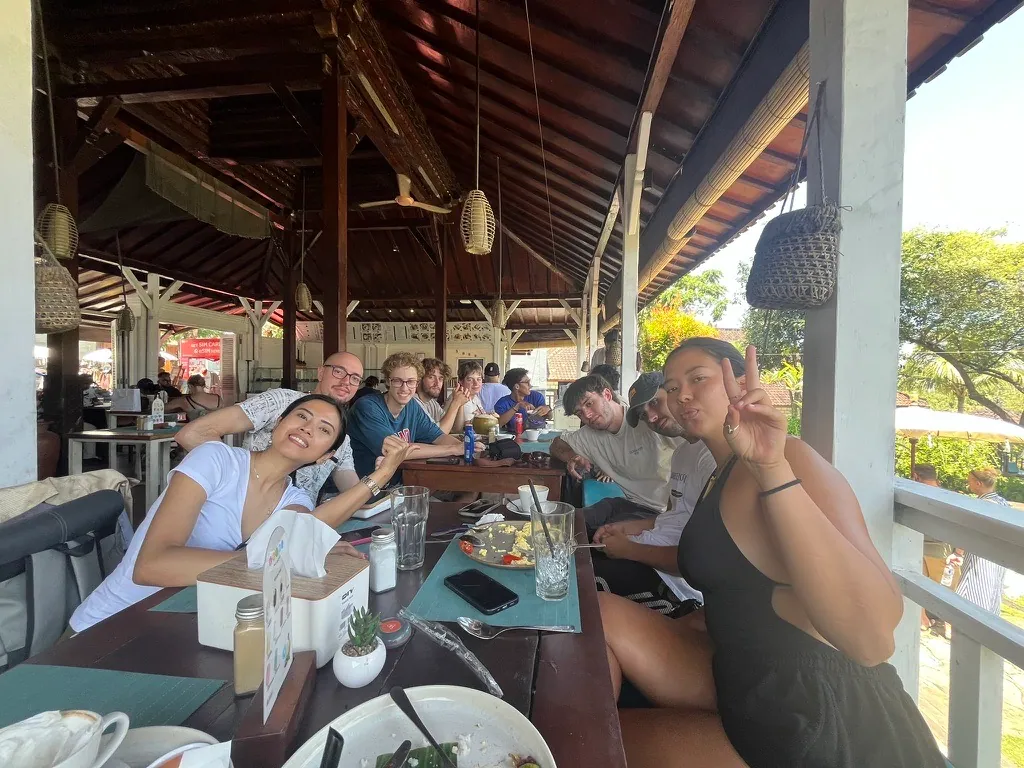
Island Internship's orientation week is included for all students and runs in the first week after arrival. It's not a formal programme — it's structured support designed to get you functional quickly.
Orientation covers: meeting the other interns in your cohort, a walkthrough of your area (the warungs, the nearest clinic, the ATMs, the routes), a scooter introduction for students who plan to ride, your first visit to your internship workplace, and a practical Q&A session covering anything you haven't figured out yet.
The value of orientation isn't the information — most of it you could find yourself eventually. The value is that you're not figuring it out alone in your first week while also starting a new job.
Day 2: The practical setup
Day two is when you start building the infrastructure of your daily life. This is actually enjoyable — Bali is easy to navigate once you've slept.
If you haven't already, get your local SIM card sorted. Telkomsel is the most reliable network across Bali; XL is a close second and often slightly cheaper. Both have shops everywhere. A SIM with 20–30GB of data costs around €10–12 and lasts a month.
Find your nearest warung — the small local restaurants that serve Indonesian food at local prices. A full breakfast of nasi goreng (fried rice) or mie goreng (fried noodles) costs €1–2. You'll be eating here regularly. It's one of the genuine pleasures of being in Bali.
Download Gojek and Grab if you haven't already. For the first week or two, these are your transport. You don't need a scooter yet — get the lay of the land first. The scooter question is worth its own thought process; see our guide to getting around in Bali.
Take a walk. Learn your streets. Notice what's where. The orientation from day one starts landing properly on day two when you've slept and can actually absorb it.

Your first week at work
Indonesian workplace culture is relationship-driven. First days — and often first weeks — involve introductions, getting to know colleagues, understanding how the team operates. Don't expect to be thrown into deep work immediately. That's not how it works, and it's not a bad sign.
Your supervisor knows you've just arrived. They've likely worked with interns from Island Internship before and they understand the adjustment. Show up on time, be curious, ask questions, and don't be afraid to admit when you don't know something.
The thing that impresses supervisors in the first week isn't how much you know — it's how quickly you read the room and how genuine your interest is in the people and the work.
If anything feels unclear about your role or expectations in the first few days, message us on WhatsApp. That's what the support is for.
First 48 Hours Checklist
Use this before and after you land:
- Get IDR cash — airport ATM or moneychanger in-destination
- Buy a local SIM card (Telkomsel or XL recommended)
- Download Gojek and Grab
- Check into your accommodation
- Message your supervisor to confirm first-day time
- Join the intern community WhatsApp group
- Find your nearest warung for breakfast
- Don't plan too much on day 1 — rest is preparation
What Island Internship handles for you
- Housing confirmed and arranged before you fly — you land knowing where you're going
- Orientation week included — practical, in-person, during your first week
- WhatsApp reachable on landing day — a real person, not a bot
- Airport pickup arranged for Full Support students
- Other interns arriving around the same time — you're not doing this alone
The first 48 hours in a new country are always a mix of excitement and low-grade overwhelm. That's completely normal. The students who handle it best are the ones who give themselves permission to not have it all figured out on day one.
You'll feel settled by the end of week one. That's what we consistently hear back.
Related reading: Bali Safety Guide for Interns · Explore Bali Placements